US Hyperscalers Are Borrowing Billions in Europe to Finance the Global AI Infrastructure Boom
The artificial intelligence boom is becoming so expensive that some of America’s largest technology companies are increasingly turning to European financial markets for funding.
US hyperscalers, including major technology companies such as Amazon and Alphabet, have rapidly increased borrowing in euro-denominated bond markets as they finance huge investments in AI infrastructure and data centres.
According to Reuters, US hyperscalers have issued around €40 billion in euro-denominated debt, reflecting the growing scale of the financial commitment behind artificial intelligence.
The development is turning Europe into an increasingly important financial participant in a technology race largely led by American companies.
AI Is Becoming an Infrastructure Industry
The AI boom is often discussed in terms of software.
Chatbots.
AI assistants.
Image generators.
Autonomous agents.
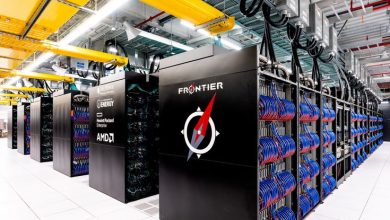
But the technology depends on physical infrastructure.
Data centres require advanced servers.
Servers require processors and networking equipment.
Entire facilities require cooling and enormous amounts of electricity.
Building that infrastructure is extremely expensive.
The world’s largest technology companies are therefore committing unprecedented amounts of money to capital expenditure.
As their investments grow, borrowing is becoming a bigger part of their financial strategies.
Why Europe?
Euro-denominated bond markets provide another major source of capital.
By borrowing in Europe, American technology companies can diversify their funding and access a different pool of investors.
European markets benefit from the arrival of large, highly recognised borrowers.
But the trend is also raising concerns.
The more money US technology companies raise in Europe, the greater the possibility that they could compete with European businesses and governments for investor capital.
The European Central Bank has warned that the trend deserves close attention because heavy borrowing by major foreign companies could affect financial conditions in the eurozone.
A Competition for Capital
Artificial intelligence is increasingly creating competition for more than technology.
Companies are competing for chips.
They are competing for electricity.
They are competing for data centre locations.
And now they are competing for capital.
That could become a challenge for Europe.
The European Union is attempting to increase investment in its own artificial intelligence infrastructure.
European companies need capital for expansion.
Governments are also borrowing to fund infrastructure and public services.
If demand for investment continues rising, access to capital could become more expensive.
Europe’s AI Investment Challenge
Europe already faces a major challenge in catching up with the United States and China in artificial intelligence infrastructure.
The continent is attempting to increase computing capacity while also investing in cloud services, cybersecurity and semiconductor technology.
But infrastructure requires enormous long-term funding.
If some of the world’s largest technology companies increasingly borrow from European investors, Europe will need to ensure its own companies still have sufficient access to capital.
That is particularly important for startups and smaller technology companies.
A major corporation can often access bond markets directly.
A growing startup may depend on venture capital, banks and private investors.
Higher competition for capital could make growth more difficult.
Opportunity and Risk
The growing presence of American hyperscalers in European bond markets is not necessarily negative.
European investors gain access to some of the world’s largest technology companies.
Financial markets benefit from additional activity.
The money being raised is also helping finance infrastructure that will support global technology development.
But Europe must also consider the long-term consequences.
If American companies build an even larger share of global AI infrastructure while using European capital to finance that expansion, the continent could remain financially connected to a technology boom without controlling a significant share of the infrastructure itself.
That is the strategic concern.
Europe wants to participate in the AI economy as a builder, not simply as an investor or customer.
AI Is Changing Financial Markets
The most remarkable part of the story is how far AI’s influence is spreading.
Artificial intelligence is no longer simply a technology issue.
It is affecting energy systems.
Real estate.
Construction.
Manufacturing.
And financial markets.
The growing use of euro-denominated bonds demonstrates that the AI race has become an industrial investment cycle.
The companies leading it need enormous amounts of money.
And Europe is becoming one of the places where they are finding it.
The question now is whether European financial markets will also provide enough capital for Europe to build its own AI future.
Because the global AI race may ultimately depend not only on who develops the best technology.
It may also depend on who can afford to keep building.