The EU’s Digital Europe Programme Is Funding the Technologies It Wants Europe to Control
Europe’s digital future is not being left entirely to private technology companies.
Through the Digital Europe Programme, the European Union is investing directly in the technologies and infrastructure it considers critical to the continent’s long-term competitiveness and digital independence.
The programme supports projects across areas including supercomputing, artificial intelligence, cybersecurity, semiconductors, advanced digital skills and the wider adoption of digital technologies by businesses and public institutions.
The strategy is based on a simple idea.
Europe cannot rely entirely on other regions to build the technologies its economy increasingly depends on.
Moving From Research to Real Deployment
Europe has long invested heavily in research.
The challenge has often been turning that research into technology that businesses, governments and citizens can actually use.
The Digital Europe Programme is designed to help close that gap.
Rather than focusing only on scientific research, the programme supports the deployment and wider use of digital technology.
That includes helping businesses access advanced tools.
It includes supporting public administrations.
And it includes developing infrastructure capable of supporting Europe’s growing digital economy.
The programme runs from 2021 to 2027 and has a budget of roughly €7.59 billion in current prices, according to the European Commission.
Supercomputing and Artificial Intelligence
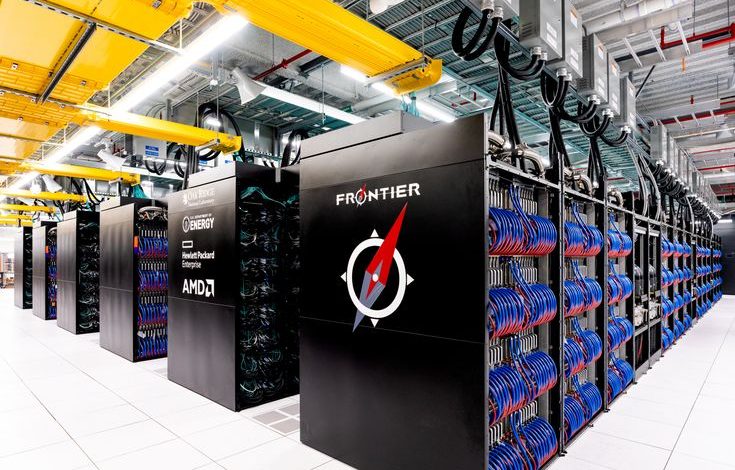
One of the programme’s most important areas is computing capacity.
Artificial intelligence requires enormous amounts of computing power.
Europe cannot become a major AI player without infrastructure capable of supporting the technology.
That is why supercomputing is a central focus.
The EU is investing in systems capable of supporting scientific research, industrial development and advanced AI applications.
The Digital Europe Programme is also supporting artificial intelligence more directly.
In 2026, the European Commission made €63.2 million available to support AI innovation in areas including health and online safety.
These investments are part of a broader effort to increase Europe’s ability to develop and deploy AI technologies.
Cybersecurity as Digital Infrastructure
Cybersecurity is another major focus.
As governments and businesses become more digital, attacks on infrastructure can create serious economic and social consequences.
The Digital Europe Programme is supporting cybersecurity capacity, including projects aimed at strengthening European capabilities and helping organisations meet new legislative requirements.
Recent calls under the programme include funding opportunities focused on cybersecurity capacity, national coordination networks and dual-use technologies.
The strategy reflects a wider European understanding that digital transformation cannot succeed without digital security.
The Semiconductor Challenge
Europe’s dependence on foreign semiconductor suppliers has become a major strategic concern.
Modern economies depend on chips.
They power phones, vehicles, data centres, industrial equipment and artificial intelligence systems.
The Digital Europe Programme includes semiconductor investment as one of its major capacity areas.
The goal is to strengthen Europe’s competitiveness and reduce dependence on external suppliers.
Europe is not attempting to manufacture every chip used inside its borders.
But it wants a stronger role in the supply chains behind critical technologies.
Building Skills as Well as Infrastructure
Technology infrastructure is only useful if people know how to use it.
That is why advanced digital skills are also part of the programme.
Europe faces growing competition for engineers, cybersecurity professionals, AI specialists and other technology workers.
Investment in skills could therefore be just as important as investment in hardware.
The Digital Europe Programme aims to support the development of those capabilities while also helping businesses adopt new technologies.
Digital Sovereignty Through Deployment
The wider goal behind the programme is digital sovereignty.
Europe wants more control over technologies that are becoming critical to its economy and public services.
That does not mean rejecting international technology.
It means reducing dangerous levels of dependence.
The EU still relies heavily on foreign companies for cloud services, chips and other critical technologies.
The Digital Europe Programme is one attempt to change that.
The strategy is not simply to regulate technology.
It is to fund the infrastructure and capabilities Europe believes it needs to compete.
A Long-Term Investment
Technology sovereignty cannot be achieved through one programme.
Europe’s technology gaps developed over decades.
Closing them will require sustained investment.
But the Digital Europe Programme provides an important example of how the EU is attempting to respond.
By funding supercomputing, AI, cybersecurity, semiconductors and digital skills, Europe is placing strategic bets on the technologies expected to shape the next generation of economic power.
The programme’s success will ultimately depend on what happens after the money is allocated.
Can Europe turn these investments into stronger companies?
More infrastructure?
More skilled workers?
And greater control over its digital future?
Those questions remain open.
But one thing is becoming clear.
Europe is no longer satisfied with simply using the technologies built elsewhere.
It increasingly wants to help build and control the systems its digital future depends on.