Beyond the Classroom: IÉSEG’s Year of Innovation, Entrepreneurship and Impact
A look at the people, projects and initiatives recognised between June 2024 and June 2025
In a world increasingly shaped by technological transformation, environmental pressures and changing social expectations, the meaning of achievement is evolving. Across education, business and innovation, recognition is no longer confined to academic distinctions or commercial success. It increasingly reflects the capacity to turn knowledge into practical solutions, build enterprises that respond to real needs, and create value that extends beyond individual accomplishment.
At IÉSEG, the period from June 2024 to June 2025 offered a compelling illustration of this expanding landscape of achievement. Through a range of awards and recognition initiatives, the French institution celebrated educators advancing teaching practices, entrepreneurs developing new business models, students exploring responsible innovation, and innovators applying technology to challenges within their communities.
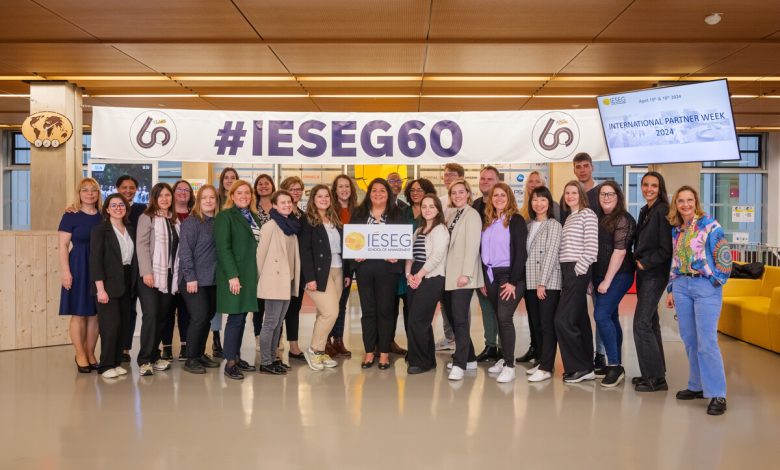
The period also coincided with IÉSEG’s 60th anniversary celebrations, marking six decades since its establishment in 1964. Its anniversary year provided a fitting backdrop for a broader reflection on education, leadership and the role of institutions in preparing people to respond to a changing world.
The awards and initiatives documented during the period were diverse in purpose and scope. Some focused on academic and pedagogical excellence, others on entrepreneurship and social innovation, while technology featured both as a field of innovation and as a means of improving how people learn, work and live.
Together, they offer a snapshot of an ecosystem in which achievement can take many forms.
Celebrating educators shaping the future of learning
One of the most visible institutional recognition initiatives during the period was the 2024 Teaching Excellence Awards, whose recipients were announced in November 2024.
Established in 2019, the awards recognise professors whose commitment and teaching approaches contribute to improving the quality of education and the student learning experience.
Six professors were honoured across the programme’s categories.
Steven Hoornaert received recognition in the Grande École Programme Bachelor Cycle category, while Jonas Debrulle was recognised in the Bachelor Programmes category. Luis Fernando Perez Armas received the award for the Grande École Programme Master Cycle, Hayley Walker was recognised in Executive Programmes, and Myriam Degrave received the Post-Graduate Programmes award.
Marjorie Fox received the Digital category award for her creative integration of virtual reality into a course on the General Data Protection Regulation, commonly known as GDPR.
The recognition of digital teaching practices was particularly relevant at a time when educational institutions are exploring new ways to combine technology with student engagement. Virtual reality, interactive learning environments and other digital tools are creating opportunities to rethink how complex subjects are taught and experienced.
The six recipients represented different dimensions of teaching excellence, but their recognition shared a common emphasis on the contribution educators make to students’ development.
Rather than treating teaching as the simple delivery of information, the awards highlighted the importance of approaches that inspire, motivate and equip learners with knowledge and skills for their future careers.
Entrepreneurship as a force for practical change
Entrepreneurship was another prominent feature of the period, with IÉSEG’s 2025 Entrepreneur Award bringing together emerging ventures seeking to address commercial, environmental and social challenges.
Held on 27 March 2025 during the institution’s Entrepreneurship Day in Lille, the ninth edition of the award featured six startup finalists pitching their projects before a jury of professionals and graduates.
The first prize, worth €8,000, was awarded to Virvolt, represented by its founder, Yvan de la Baume, an IÉSEG graduate from 2018.
Virvolt specialises in motorising bicycles, with the aim of making electric bicycles more accessible while reducing the environmental impact of transportation. Its approach places mobility, affordability and sustainability within the same entrepreneurial proposition.
The Jury’s Favourite Award, worth €3,000, went to Izalgue, a project led by Andrea Tassard, who graduated from IÉSEG’s Master’s in Entrepreneurship and Innovation programme in 2022.
Izalgue is developing an approach to insulation using washed-up seaweed, exploring how an underused natural material might contribute to the energy transition and the development of alternative insulation solutions.
Virvolt also received the newly introduced Public’s Favourite Award, following a public vote.
The projects illustrate how entrepreneurial innovation can involve rethinking established industries rather than necessarily creating entirely new ones. From bicycle transportation to building insulation, both ventures seek to introduce alternatives that respond to contemporary environmental and economic concerns.
The awards also reflect the role of entrepreneurial support structures in helping founders develop ideas, test their potential and connect with people and organisations capable of supporting their growth.
New approaches to responsible innovation
The period also saw the introduction of the Fox Changemakers Awards, organised in March 2025 by IÉSEG CONSEIL Paris, the institution’s Paris-based Junior-Entreprise.
The inaugural edition was organised in partnership with the IÉSEG Student Federation, the IÉSEG incubator and BNP Paribas. It focused on student projects with social or environmental impact, encouraging responsible entrepreneurship and practical innovation.
Three projects: Buddyz, Rently and Avenear were selected as finalists. They were assessed on their societal impact, feasibility and alignment with the institution’s values.
The first prize went to Buddyz, a startup founded by Nathan Viaud, which offers connected identification tags for pets.
The award included a tailored market study conducted by IÉSEG CONSEIL Paris, personalised support through the IÉSEG incubator, and €500 in funding from BNP Paribas.
Although modest in financial value compared with some larger entrepreneurship competitions, the initiative illustrates another form of support for emerging ventures: combining recognition with practical assistance, market research and opportunities to develop a business idea.
For early-stage entrepreneurs, such support can be an important bridge between a promising concept and a more structured commercial proposition.
Social entrepreneurship and the pursuit of inclusion
Social innovation remained a central theme through the 2025 edition of the Créenso Prize, a national social entrepreneurship initiative jointly organised by IÉSEG and the Ceetrus Foundation.
The programme connects social enterprises with IÉSEG Master’s students, who provide skills-based support in areas such as marketing, finance, human resources and strategy. The initiative seeks to strengthen young enterprises whose objectives place human and social impact at the heart of their activities.
The 2025 awards recognised two organisations.
Libel’Up, founded by Quentin Brassart, received the main Créenso Prize, worth €25,000. The enterprise focuses on collecting, repairing and redistributing refurbished medical equipment, addressing the need to make healthcare resources more accessible while extending the useful life of equipment.
The Jury’s Favourite Prize, worth €5,000, was awarded to La Cavalerie Arc-en-Ciel, led by Tatiana Molé. The organisation operates an inclusive equestrian centre promoting acceptance and animal welfare.
The two recipients demonstrate different approaches to social impact. One seeks to improve the circulation and accessibility of medical equipment; the other uses an inclusive environment and equestrian activities to advance social and personal well-being.
Their recognition reinforces the idea that innovation is not limited to digital products or emerging technologies. It can also be found in new ways of organising services, using resources and responding to people whose needs may be overlooked by conventional models.
African digital innovators leveraging technology for development
The period also included an international dimension through a digital technology programme associated with IÉSEG’s collaboration with Innovation Makers Alliance (IMA), a leading French-speaking technological consortium that connects digital and innovation leaders from major companies, mid-sized businesses (ETIs), and public administrations.
African innovators Seun Paul Olatunji, Oluwafemi Wale Oguniyi and Efetobore Alexander Monedo were recipients of the recognition held at the Digital Technology Winter Program in Lille, France, from 6th to 10th January 2025 during which a critical judgment to evaluate innovation and sustainabilty was carried out by the Innovation Makers Alliance.
The participation among peers in the programme later confirmed these personalities as Top 5 African Digital Innovators for leveraging technology for sustainable development.
The recognition forms a brief but notable part of the wider story, reflecting the international reach of digital innovation and the contribution of African technology entrepreneurs working to apply technology to practical challenges.
Recognition beyond individual awards
The period also included external recognition for IÉSEG and members of its community.
In January 2025, Ophélie Vanbremeersch, an IÉSEG graduate and founder of Lunettes de Zac, received the Financial Times Responsible Business Education Awards’ Student Award. Her enterprise collects, refurbishes and resells used eyewear, applying circular-economy principles to a product category in which many frames otherwise remain unused.
The recognition followed IÉSEG’s own success in the 2024 edition of the Financial Times awards, when the institution received an award for embedding responsible business principles across teaching, research, operations and student outcomes. These were external honours, rather than prizes presented by IÉSEG, but they add context to the institution’s wider engagement with responsible business and sustainability.
Such distinctions also underline how the work of graduates can continue to reflect on the educational communities from which they emerge, particularly when their ventures address environmental and social concerns.
A wider understanding of achievement
Across the period, the people and projects recognised by IÉSEG represented a wide range of disciplines and ambitions.
The educators honoured in November 2024 demonstrated the continuing importance of teaching innovation and student engagement. The entrepreneurs recognised in March 2025 explored new approaches to mobility, insulation and responsible business. The Créenso recipients showed how enterprise can be directed towards healthcare resources, inclusion and social well-being. The Fox Changemakers Awards offered practical support to student-led innovation, while the digital technology recognition associated with IÉSEG and Innovation Makers Alliance brought an African dimension to the period’s story.
These initiatives should not be collapsed into a single award scheme: they had different organisers, purposes and selection processes. Yet viewed together, they reveal a broad understanding of the kinds of contributions that can merit attention within an educational and entrepreneurial ecosystem.
The common thread is the relationship between ideas and their application.
A teaching method matters when it helps students learn. A startup becomes meaningful when it responds to a genuine need. Research gains relevance when it informs decisions and practice. Technology can create value when it is applied thoughtfully, with attention to the people and communities affected by it.
Looking ahead
The recognition activities between June 2024 and June 2025 offer a reminder that innovation is not the responsibility of one profession, one country or one generation.
It can emerge in a classroom where a professor experiments with virtual reality, in a startup reimagining how people travel, in a social enterprise making medical equipment available for reuse, or in a digital solution developed by an entrepreneur seeking to address challenges within an African community.
The achievements recognised during this period were varied, but each reflected an effort to translate knowledge, creativity or enterprise into something with practical value.
As technology continues to reshape industries and societies, institutions, entrepreneurs and educators will face the continuing challenge of ensuring that progress is not measured only by novelty or growth, but also by usefulness, responsibility and the lives it improves.
That is the wider significance of this year of recognition: not simply the presentation of awards, but the people and ideas behind them, and the possibilities they represent for a more innovative, inclusive and sustainable future.