EU Introduces New Rules to Track the Energy and Water Use of Data Centres
The European Union is introducing new sustainability rules aimed at making Europe’s rapidly expanding data-centre industry more transparent about its consumption of electricity and water.
The European Commission unveiled a new sustainability rating system on Monday that will allow large data centres across the bloc to report and display information about their energy and water efficiency.
The move comes as Europe faces a difficult balancing act.
The continent wants to expand its digital infrastructure, cloud computing capacity and artificial intelligence capabilities, but data centres require enormous amounts of electricity and, in many cases, significant quantities of water for cooling.
Why data centres are becoming an energy issue
Data centres are the physical infrastructure behind many of the digital services Europeans use every day.
Cloud storage, streaming services, online applications, financial platforms and artificial intelligence systems all depend on large collections of servers operating inside specialised facilities.
As AI workloads become more demanding, the amount of computing infrastructure required is increasing.
The European Commission estimates that data centres in Europe consumed around 68 terawatt-hours of electricity in 2024.
That figure could rise to approximately 114 TWh by 2030, potentially accounting for 3.2% of electricity consumption across the EU compared with about 2.5% today.
The growth is creating pressure on electricity networks and raising concerns in communities where large data-centre projects are being developed.
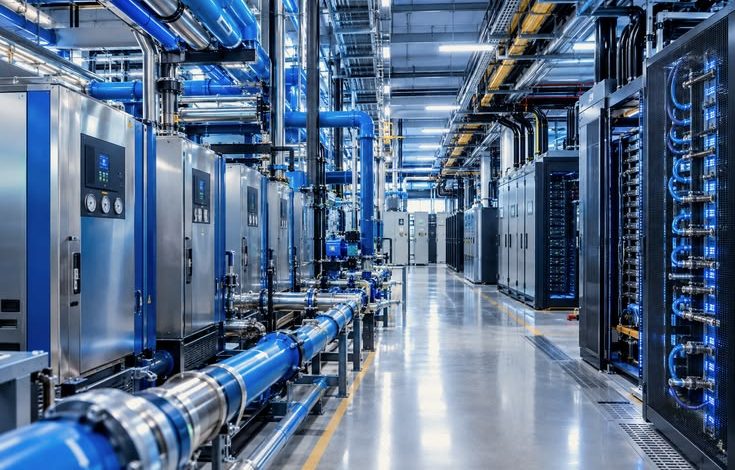
Water consumption is another concern because some data centres rely on water-based cooling systems to prevent servers from overheating.
A new sustainability label
Under the EU’s new rules, data centres with more than 500 kilowatts of installed capacity that fall under the bloc’s energy-efficiency reporting requirements will receive an electronic sustainability label.
The system is intended to make facilities easier to compare.
Instead of looking only at how powerful a data centre is, organisations will be able to consider factors including energy efficiency, water efficiency and the source of the electricity being used.
The European Commission says the information should help policymakers and organisations make better decisions when selecting digital infrastructure.
For example, a company looking for cloud infrastructure could eventually have more information available when comparing the environmental performance of different facilities.
Europe wants more data centres too
The challenge is that Europe cannot simply stop building data centres.
The EU wants to significantly increase its computing capacity over the coming decade as it attempts to strengthen its own digital infrastructure and reduce dependence on foreign technology companies.
The European Commission has set an ambition to triple data-centre capacity by 2035.
That creates an obvious tension.
Europe wants more computing power for cloud services and AI, but it also wants that infrastructure to consume resources more responsibly.
The new rating system is therefore being introduced before the tougher requirements arrive.
Harder standards are coming
For now, the EU is not imposing strict maximum limits on how much energy or water a data centre can consume.
Instead, the Commission plans to introduce minimum performance requirements in 2027.
Those future standards are expected to establish minimum efficiency levels for new facilities and prevent data centres from being built without meeting certain sustainability requirements.
That gives the industry time to prepare.
It also gives technology companies an opportunity to influence how the standards are designed.
Microsoft, for example, has already submitted views on proposed water-efficiency measurements, supporting the use of energy and water efficiency as sustainability indicators while requesting changes to some of the proposed water-efficiency bands.
Environmental campaigners have meanwhile criticised the influence of large technology companies over the process.
The hidden infrastructure behind AI
The debate highlights an important part of Europe’s technology expansion that consumers rarely see.
AI applications may exist on phones and laptops, but the computing power behind them lives in massive data centres.
Every AI-generated image, cloud backup, streaming service and online application ultimately depends on physical infrastructure consuming electricity.
Europe’s new rules therefore represent an attempt to make the environmental cost of digital services more visible.
The Commission is also examining whether data centres could play a more active role in electricity networks, including providing flexibility to the grid and potentially supplying waste heat to nearby communities.
As Europe builds more computing capacity, the question will no longer be simply how much technology the continent can build.
It will also be about how efficiently that technology can operate.