Isar Aerospace Signs Five-Launch Deal as Europe Builds Its Commercial Rocket Industry
German launch company Isar Aerospace has signed a contract for five launches with SEOPS, marking another step forward for Europe’s growing commercial space industry.
The agreement covers five future launches and comes shortly after Isar Aerospace’s second successful launch, according to satellite-industry publication Via Satellite.
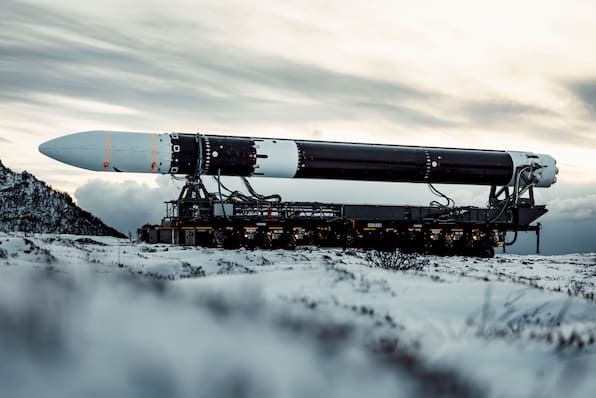
Isar Aerospace is developing rockets designed to provide dedicated launch services for satellites and other spacecraft.
The company is part of a growing group of European startups attempting to build an independent commercial launch industry.
For decades, European governments and companies relied heavily on a relatively small number of established launch providers.
The emergence of private European rocket companies is changing that landscape.
Isar Aerospace’s launch vehicle is designed to carry satellites into orbit, giving customers another option for putting spacecraft into space.
The five-launch agreement with SEOPS is particularly significant because repeat launch contracts can provide commercial rocket companies with greater visibility into future demand.
For a rocket manufacturer, securing individual missions is useful, but building a backlog of multiple launches can make it easier to plan production, staffing and infrastructure.
The agreement also highlights growing demand for satellite launches.
More companies are developing spacecraft for communications, Earth observation, scientific research and other applications.
As the number of satellites increases, launch providers are competing to offer customers reliable and relatively affordable access to orbit.
Europe is attempting to strengthen its position in that market.
Several European companies are working on launch vehicles, satellite systems and other space infrastructure.
Governments and European institutions have also increasingly emphasized the importance of maintaining independent access to space.
That has strategic as well as commercial implications.
Having domestic launch capabilities means European organisations are less dependent on launch providers based elsewhere.
It can also create a larger ecosystem of aerospace companies, engineers, manufacturers and suppliers.
For Isar Aerospace, however, the challenge now is scaling reliably.
Rocket development is technically difficult, and commercial customers need confidence that their satellites will reach orbit safely and on schedule.
The company’s second successful launch provides additional evidence that its technology is progressing.
The new five-launch contract gives the company another opportunity to demonstrate that progress.
If Isar Aerospace can continue building a reliable launch cadence, repeat customers could become increasingly important to its business.
The deal with SEOPS therefore represents more than five individual missions.
It is another indication that Europe’s commercial space sector is moving toward a market where private companies can provide launch and satellite services at scale.