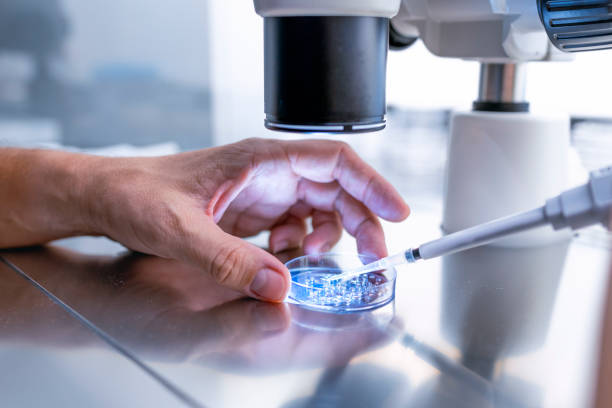
European Innovation Council Awards Funding to 43 Research Projects Developing Future Technologies
The European Innovation Council has selected 43 research projects for support under its 2026 Pathfinder Open programme, helping researchers explore technologies that could eventually lead to new products, industries and scientific breakthroughs.
Announced on October 14, the initiative offers each selected project up to €4 million in grant funding. The projects cover a broad range of fields, including quantum computing, medical research, advanced manufacturing and climate-resilient agriculture.
The programme is designed to support ambitious early-stage research where the potential benefits could be significant but the path to commercial application remains uncertain.
Supporting Research Before It Becomes a Product
Many technologies that later transform industries begin as experiments in laboratories and universities. However, early research can be expensive, technically challenging and difficult to finance through conventional investment.
The Pathfinder programme supports researchers investigating ideas that could create entirely new markets or provide new ways to address societal problems.
The 2026 selection brings together 218 organisations from 30 countries, including 24 European Union member states. Small and medium-sized enterprises participate in 34 of the selected projects, connecting research institutions with companies that may eventually help commercialise discoveries.
Funding is conditional on the projects completing the required grant agreements.
From Cancer Treatment to Quantum Computing
Among the selected projects is LUNGBOT, which is investigating an experimental approach to lung cancer treatment using engineered bacteria designed to produce therapeutic molecules directly within tumours.
Another project, NoBIQu, is exploring ways to make quantum computing more reliable by improving the architecture of quantum bits and the methods used to correct errors.
Quantum computers could eventually help researchers address certain problems that are difficult for conventional computers. However, errors remain a major obstacle to building reliable large-scale systems.
The selected projects also include DyHoLIT, which is investigating precision manufacturing techniques that could have applications in semiconductor production and biomedical research.
Meanwhile, DEW2ROOT is developing a wood-based technology intended to capture moisture from the air and deliver it to plant roots. If successful, the approach could contribute to agricultural and environmental projects in regions affected by drought.
These examples illustrate how research funding can support work across very different industries.
Why Europe Is Investing in Early Innovation
Europe has a strong research base, but turning discoveries into successful businesses can be difficult. Researchers may need specialised equipment, additional testing and commercial partners before their ideas become viable products.
Public research funding can help bridge part of that gap by allowing teams to investigate promising concepts before private investors are ready to commit significant capital.
The challenge is ensuring that promising projects continue progressing after the initial research stage. Scientific success does not automatically guarantee a commercially successful product, and many technologies require years of further development.
What Comes Next?
The European Innovation Council expects the selected teams to move towards formal grant agreements and begin advancing their research plans.
The programme is one part of a wider European effort to strengthen innovation and support technologies with long-term economic and social potential.
For Europe, the ultimate test will be whether discoveries made in laboratories can become useful products, competitive businesses and solutions to real-world challenges.