French Deep-Tech Startup Lightspring Raises €3.5 Million to Industrialise Photonic Chip Packaging
French deep-tech startup Lightspring has raised more than €3.5 million to industrialise its technology for packaging photonic chips.
The Besançon-based company announced a €3.1 million seed round alongside a €350,000 public grant, bringing the total financing secured for the project above €3.5 million.
The funding round was led by Atlantic and OVNI Capital, with participation from Concept Ventures, Ixcore, Plug and Play Ventures and several industry business angels.
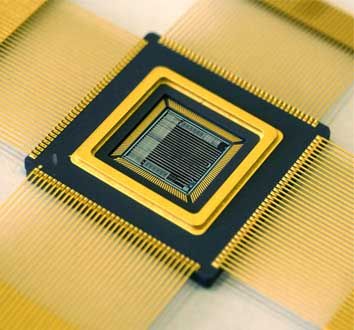
Lightspring is working on a part of photonic chip manufacturing that is often overlooked but can represent a substantial portion of the overall cost: optical packaging.
What are photonic chips?
Traditional computer chips use electrical signals to process and move information.
Photonic chips use light.
Instead of relying entirely on electrical signals, photonic integrated circuits can use photons to transmit and process information.
The technology has applications in telecommunications, high-performance computing, artificial intelligence infrastructure, sensing and other areas where large quantities of information need to move rapidly.
As computing systems become more demanding, moving data efficiently is becoming increasingly important.
That is creating opportunities for companies developing technologies that connect electronic and optical systems.
The packaging challenge
Building a photonic chip is only one part of the process.
The chip must also be connected to optical fibres and other components so that light can enter and leave the device efficiently.
That process is known as optical packaging.
Lightspring says optical packaging currently accounts for around half the cost of a photonic chip, making it one of the biggest obstacles to wider commercial deployment.
If companies can reduce the cost and complexity of this stage, photonic technologies could become easier to manufacture at scale.
That is the problem Lightspring is targeting.
A 3D approach
The company has developed a 3D optical coupling process designed to connect photonic chips with optical components more efficiently.
The technology is intended to improve the alignment between the optical elements.
That may sound like a relatively small engineering detail, but precision is critical in photonics.
Light needs to travel through the system with minimal loss.
Even tiny alignment errors can reduce efficiency.
Automating and simplifying that process could therefore have a major impact on manufacturing costs.
Lightspring’s objective is to take its technology out of the laboratory and onto a production line.
Why the timing matters
The demand for photonic technologies is growing as data-intensive computing expands.
Data centres increasingly need to move enormous quantities of information between processors, memory and networking equipment.
Optical communication can provide advantages over traditional electrical connections in certain applications.
But the cost and complexity of manufacturing photonic components remains one of the barriers to broader adoption.
This gives startups like Lightspring an opportunity.
Rather than attempting to build an entire photonic computing system, the French company is concentrating on a specific manufacturing bottleneck.
That kind of specialised technology can become extremely valuable if the underlying market grows.
France’s deep-tech ecosystem
Lightspring’s fundraising also demonstrates the role of public and private funding in Europe’s deep-tech sector.
The company was named a laureate of i-Lab, France’s national deep-tech innovation competition, and received a €350,000 grant alongside its private investment.
This combination allows young technology companies to finance research while gradually moving toward commercial manufacturing.
Deep-tech businesses typically require more capital and longer development periods than ordinary software startups because their products depend on physical technology, engineering and manufacturing.
That makes early support particularly important.
From laboratory to factory
Lightspring’s next challenge is therefore straightforward but significant: prove that its technology can operate outside controlled research environments.
Moving from a laboratory prototype to industrial production requires reliable manufacturing processes, repeatable performance and customers willing to integrate the technology into their own systems.
The company’s new funding is intended to support precisely that transition.
If Lightspring succeeds, its technology could help lower the cost of photonic chip manufacturing and make optical technologies more commercially accessible.
For France and Europe, the project also contributes to a broader effort to build domestic capabilities in advanced semiconductor and photonics technologies.
The future of computing will not depend only on faster processors.
It will also depend on the technologies that allow enormous amounts of information to move between them.
Lightspring is betting that better optical packaging can become an important part of that future.