London Startup Unit1 Raises £20 Million to Take Digital Avatar Concerts Global
London-based music technology company Unit1 Studio has raised £20 million in new funding as it prepares to expand its digital avatar concert business beyond the model popularised by virtual performances such as ABBA Voyage.
The funding round was backed by Balderton Capital, existing investor Mercuri and music executive Paul McGuinness, according to European startup funding reports.
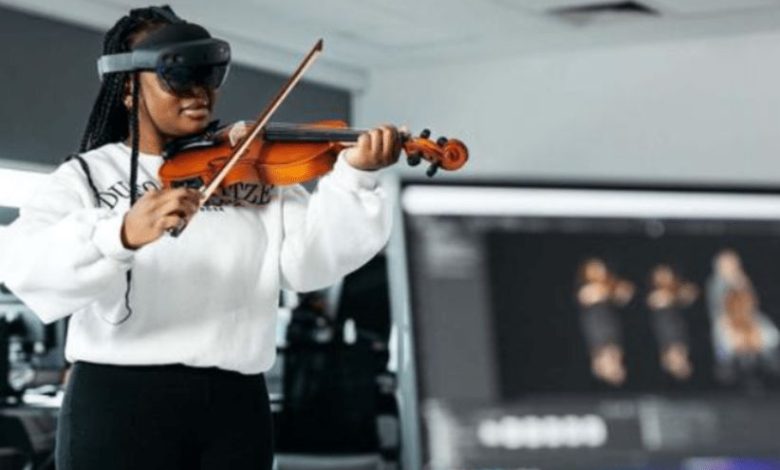
Unit1 is building technology that allows musicians to create highly realistic digital versions of themselves that can perform in live entertainment environments.
The company believes digital performers could allow artists to continue entertaining audiences even when they are not physically present.
Beyond traditional concerts
The idea of digital concerts is not entirely new.
ABBA Voyage demonstrated that audiences could pay to watch digital versions of performers in a dedicated venue, combining music, visual effects and advanced production technology.
Unit1 wants to take that concept further.
Instead of treating digital performers as a single special attraction, the company is developing an end-to-end system for creating, managing and distributing digital musician avatars.
The goal is to make it possible for artists to recreate live performances in different locations without requiring the physical artist to travel.
That could fundamentally change the economics of touring.
A major artist normally needs to move people, equipment and production teams from one city to another. A digital avatar could potentially perform in another venue while the artist remains elsewhere.
A new business for musicians
Unit1 was founded by Barney Wragg and is focused on building technology around digital representations of real musicians.
The company’s new funding will help it develop its platform and expand its commercial operations.
Its ambitions extend beyond simply creating realistic digital characters.
The company is also working on the rights and commercial infrastructure required when an artist’s likeness and performance are recreated digitally.
That is particularly important because an artist’s digital identity can become a valuable asset.
Who owns the avatar?
Who controls where it performs?
How is revenue divided?
What happens when the artist wants to stop using it?
These questions become increasingly important as digital performers become more sophisticated.
The technology behind digital performers
Creating a convincing digital musician requires much more than producing a computer-generated face.
A digital performer needs to reproduce appearance, movement, expressions and performance style convincingly enough for an audience to accept the experience.
That means combining visual effects, motion capture, computer graphics, audio production and increasingly sophisticated software.
The result can create a performance that feels live even though the person represented on stage is not physically there.
For artists, the technology could potentially create additional opportunities outside conventional touring.
A performer could potentially appear in multiple cities through different digital productions, allowing audiences in different markets to experience a show without requiring the artist to physically travel to each location.
Why investors are interested
Unit1’s £20 million raise comes as investors continue looking for technology businesses that combine software with large consumer markets.
Music is already deeply digital.
Streaming transformed how people listen to songs, social media transformed how artists promote themselves and online platforms transformed how audiences discover new performers.
Digital concerts could become another stage of that transformation.
The technology could also be useful for artists who have retired, cannot tour regularly or want to create permanent entertainment attractions.
However, digital performances will still have to prove that audiences are willing to pay for them.
The success of ABBA Voyage demonstrated that there is demand for technologically advanced live entertainment, but recreating that success across different artists and markets could require significant investment in venues and production.
Europe’s entertainment-tech opportunity
Unit1’s fundraising also highlights the increasingly blurred line between technology and entertainment.
The company is not simply a music business and not simply a software company.
It sits somewhere between digital media, entertainment, computer graphics and live events.
For London and the wider European technology ecosystem, that combination represents another area where startups are attempting to build globally scalable businesses around intellectual property and technology.
If Unit1 succeeds, audiences could eventually experience concerts from artists in ways that would have been difficult to imagine before digital performers became technically convincing.
The next generation of concerts may therefore not always require the artist to physically be on stage.