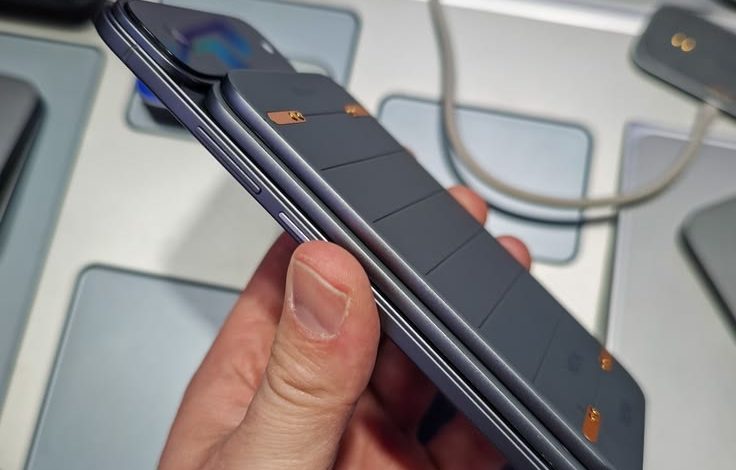
IFA 2026 Shows Where Consumer Tech Is Heading Next — From Bezel-Free Phones to Smart Glasses
The annual IFA technology show in Berlin has once again provided an early look at the gadgets and consumer technologies that could shape the next stage of the electronics market.
This year’s event featured everything from smartphones with almost no visible bezels to new laptops, projectors, robot vacuums, smart glasses and wearable devices. While artificial intelligence remained present across many products, the bigger story was how manufacturers are trying to make technology more portable, connected and practical.
Smartphones Are Getting More Ambitious
One of the most visually striking products at IFA 2026 was Tecno’s bezel-less smartphone concept.
The device pushes the display almost completely to the edges of the phone, creating an unusually immersive screen experience. Although concepts do not always become commercial products immediately, they provide a useful indication of the direction manufacturers are exploring.
The smartphone industry has been searching for new ways to make devices feel different after years of relatively similar designs.
Foldables were one answer.
Larger camera systems were another.
Now manufacturers are increasingly experimenting with displays that remove physical boundaries from the traditional smartphone design.
Laptops Are Becoming More Flexible
Lenovo also demonstrated Project Swan, a concept laptop featuring a horizontally expanding OLED display.
Instead of simply opening a larger laptop, the concept allows the screen itself to expand sideways.
The idea addresses a familiar problem in portable computing: users want a large display when working but do not necessarily want to carry a large machine everywhere.
If technologies like this eventually become affordable enough for mainstream consumers, laptops could become much more adaptable to different environments.
Smart Glasses Continue Their Slow Rise
Another major theme at IFA was wearable computing.
Companies including Xreal and RayNeo showcased new smart-glasses products, while other manufacturers demonstrated wearable devices designed to provide information without requiring users to constantly look down at a phone.
The technology is still developing.
Smart glasses have struggled to become mainstream because of concerns around battery life, comfort, price and privacy.
However, newer products are increasingly trying to solve those problems by making the hardware lighter and giving users more practical reasons to wear them.
Instead of trying to replace smartphones entirely, manufacturers appear to be positioning smart glasses as another interface connected to the devices people already use.
Robot Vacuums Are Becoming More Capable
IFA also demonstrated how robotics is moving deeper into ordinary household products.
iRobot introduced the Roomba Duo, a robot vacuum designed with a smaller deployable cleaning unit that can reach tighter spaces.
Other companies showcased increasingly sophisticated robot cleaners and smart-home products.
This reflects a broader change in consumer robotics.
The technology is moving away from impressive demonstrations and towards practical household tasks.
Consumers are increasingly asking a simple question: What can this machine actually do for me?
Manufacturers that can provide useful answers may have an advantage over companies that simply add technology for marketing purposes.
Health Is Moving Into Wearables
Health-focused technology was another strong theme.
Anker showcased earbuds with sleep-related capabilities, while Circular presented a smart ring capable of ECG monitoring and contactless payments.
These products demonstrate how wearable technology is gradually expanding beyond simple fitness tracking.
Instead of merely counting steps or monitoring workouts, manufacturers are attempting to turn everyday accessories into continuous personal technology platforms.
That could eventually make health information more accessible, although privacy and accuracy will remain important concerns.
The Bigger Trend
The most interesting thing about IFA 2026 may not be any single product.
It is the direction of the industry.
Technology companies are increasingly trying to make devices smaller, more flexible, more connected and less intrusive.
Phones are exploring new screen designs.
Laptops are experimenting with expandable displays.
Smart glasses are attempting to move computing away from traditional screens.
Wearables are becoming more capable.
Household robots are becoming more practical.
The next phase of consumer technology may therefore be less about simply adding more powerful specifications and more about changing how people interact with technology.