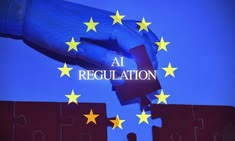
Europe’s AI Act Enters a New Phase — and Companies Are Now Facing Enforcement
Europe’s landmark Artificial Intelligence Act is moving beyond legislation and into enforcement.
After years of debate over how artificial intelligence should be regulated, companies operating in Europe are now facing a growing number of real compliance obligations.
Major transparency requirements under the EU’s AI Act came into effect on August 2, 2026, marking another significant step in the law’s phased implementation.
The shift matters because the European Union is no longer simply setting out principles for responsible AI.
It is increasingly asking companies to demonstrate how their systems comply with those principles.
For technology companies, the AI Act is becoming a practical business issue.
From Policy to Compliance
When the EU first introduced the AI Act, much of the discussion focused on its potential impact.
Technology companies debated whether the rules would slow innovation.
Governments discussed whether Europe could successfully regulate a technology developing faster than traditional legislation.
Now the focus is changing.
Companies need to understand what the rules mean for the products and services they actually operate.
The AI Act uses a risk-based approach.
Different AI systems face different levels of obligations depending on how they are used and the potential risks they create.
Some uses of AI face strict requirements, particularly where systems could affect areas such as employment, education, public services and other high-impact decisions.
The phased rollout means companies must now begin adjusting their systems and internal processes.
Transparency Is Becoming a Major Requirement
One of the most important developments is the growing focus on transparency.
Companies deploying certain AI systems are expected to provide clearer information about how those systems operate and how AI-generated content is identified.
The idea is to make it easier for users and regulators to understand when artificial intelligence is involved.
This could affect everything from generative AI tools to automated systems used inside businesses.
For companies building AI products, compliance could increasingly become part of product development rather than something handled after launch.
That represents a significant change.
Technology companies are accustomed to building products quickly and dealing with regulation later.
The EU’s approach is attempting to bring regulatory considerations earlier into the development process.
Global Companies Cannot Ignore Europe
The AI Act is particularly important because of the size of the European market.
Companies operating globally may find it difficult to build one AI system for Europe and another for the rest of the world.
As a result, European rules could influence technology development far beyond the EU.
This has happened before.
The General Data Protection Regulation, or GDPR, helped establish new expectations around data protection internationally.
The AI Act could have a similar influence.
Companies may decide that complying with European requirements is easier than maintaining entirely separate systems for different regions.
However, that influence is not guaranteed.
AI regulation remains highly fragmented.
The United States, China and other regions are developing different approaches.
Europe’s challenge will be enforcing its rules without making the region less attractive to technology investment.
Enforcement Will Be the Real Test
Writing regulations is one thing.
Enforcing them is another.
The EU will need regulators capable of understanding complex AI systems and investigating companies when concerns arise.
That could be difficult.
Artificial intelligence systems are often complicated.
The technology can change quickly.
And regulators may be dealing with companies operating across multiple countries.
The success of the AI Act will therefore depend heavily on enforcement capacity.
Companies will also be watching closely.
The first major enforcement actions could help define how seriously regulators intend to apply the rules.
The Wider European Technology Strategy
The AI Act is only one part of Europe’s broader technology strategy.
The European Union is also investing in AI infrastructure, supercomputing, cloud capacity and semiconductor development.
The goal is not simply to regulate AI created elsewhere.
Europe wants to become more capable of developing and deploying the technology itself.
That balance will be important.
Too much regulation could discourage investment.
Too little could create risks for citizens and businesses.
Europe is attempting to find a middle ground.
AI Governance Is Becoming a Competitive Issue
The next phase of the AI industry will not be defined only by who develops the most powerful models.
Trust could become equally important.
Businesses and governments may prefer AI systems they believe are secure, transparent and compliant with recognised standards.
That could create opportunities for European companies capable of turning regulation into an advantage.
For now, however, companies have a more immediate challenge.
The era of simply discussing the EU’s AI Act is ending.
The era of actually complying with it has begun.
And as enforcement expands, artificial intelligence regulation will increasingly become one of the most important business issues facing the global technology industry.