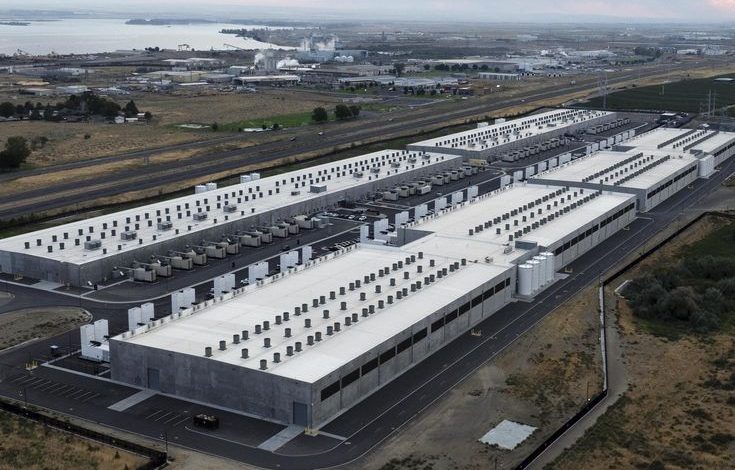
The AI Boom Is Turning Data Centres Into One of Technology’s Biggest Innovation Challenges
Data centres used to be relatively predictable engineering projects. The AI boom has turned them into one of the most complex innovation challenges in technology. Power density, cooling, networking and grid interconnection are all being rewritten at once.
Rack power has jumped from the traditional 5–20 kW range to 100–200 kW and beyond for AI clusters. Some roadmaps point toward megawatt-class racks within a few years. Air cooling, long the default, becomes ineffective above roughly 30–40 kW per rack. Liquid cooling—direct-to-chip or immersion—is rapidly becoming mandatory for new AI facilities. Bank of America expects liquid cooling to account for 70% of new AI data-centre installations by 2030.
Power delivery is an even tighter constraint. Transformers, medium-voltage switchgear and onsite generation equipment have multi-year lead times. Grid interconnection queues in major markets can stretch five to eight years or more. Many operators are now designing “bring-your-own-power” architectures that combine grid connections with onsite generation and storage so facilities can open before full utility upgrades arrive.
Networking faces its own scaling problems. Once clusters exceed tens of thousands of GPUs, moving data between chips becomes as critical as the compute itself. Optical interconnects and higher-radix fabrics are under intense development. At the same time, operators must manage heat rejection at facility scale, water usage, and increasingly stringent sustainability requirements.
The result is a systems-engineering problem that spans electrical engineering, thermodynamics, materials science and software orchestration. Prefabricated modular designs, reference architectures and tighter integration between power, cooling and compute are emerging as practical responses. Companies that once competed mainly on IT equipment are now competing on the entire power-to-chip stack.
For the industry, the implication is stark. The speed of AI progress is no longer limited only by algorithms or silicon. It is limited by how quickly physical infrastructure can be designed, permitted, powered and cooled. That makes data-centre innovation one of the defining technical challenges of the decade.