Europe Is Building a €387.8 Million AI Supercomputer and the Message Is Bigger Than the Machine
Europe’s race to build its own artificial intelligence capabilities is becoming increasingly physical.
It is no longer only about developing AI regulations, encouraging startups or investing in research.
Europe is now investing heavily in the infrastructure required to actually power artificial intelligence.
The latest example is LUMI-AI.
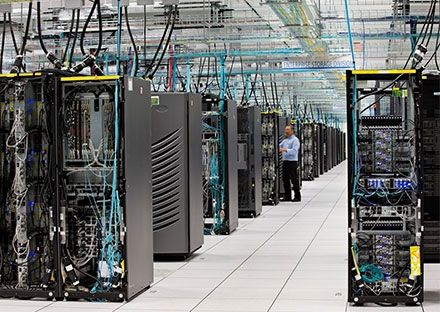
The European Union’s supercomputing initiative has signed a €387.8 million contract with Bull to deploy a new AI-focused supercomputer in Kajaani, Finland.
The system will support the LUMI AI Factory and significantly expand Europe’s ability to provide the enormous computing resources required by modern artificial intelligence.
But the importance of the project goes beyond one supercomputer.
It reflects a much larger question facing Europe.
Can the continent build enough computing capacity to remain competitive in an AI industry increasingly dominated by the United States and China?
AI Needs More Than Ideas
Europe has no shortage of researchers, engineers and technology companies.
The continent has produced important scientific research and continues to develop promising artificial intelligence startups.
But developing AI models is becoming increasingly dependent on one critical resource.
Computing power.
Training and operating advanced AI systems can require enormous amounts of specialised hardware.
The largest technology companies are investing billions of dollars into data centres, processors and cloud infrastructure.
Without access to those resources, even talented researchers and ambitious startups can face serious limitations.
This is one of the reasons Europe’s investment in LUMI-AI matters.
The project is designed to increase the availability of high-performance computing for researchers, businesses and organisations developing artificial intelligence technologies.
The goal is not simply to own an impressive machine.
It is to create infrastructure that can support an entire ecosystem.
Why Europe Cannot Ignore AI Infrastructure
The AI industry is creating a new type of technological dependency.
Countries and companies that do not have access to advanced computing infrastructure may become increasingly dependent on those that do.
That dependency can influence everything from research and business competitiveness to public services and national security.
Europe has already experienced similar concerns in other areas of technology.
The continent depends heavily on foreign companies for major digital platforms, cloud infrastructure and advanced semiconductors.
Artificial intelligence could create another dependency if Europe is unable to develop sufficient computing capacity of its own.
Projects such as LUMI-AI are therefore part of a wider effort to ensure that European organisations have access to the infrastructure needed to develop and deploy advanced technology.
The question is becoming increasingly strategic.
Who owns the computing power?
Who controls access to it?
And who benefits from the next generation of AI systems?
From Supercomputer to AI Factory
The idea of an AI factory is particularly important.
Traditional supercomputers are often associated with scientific research.
They can be used to model weather systems, study complex physical processes and support advanced scientific work.
AI factories expand that idea.
They are designed to provide the specialised computing infrastructure needed to develop, train and deploy artificial intelligence systems.
This can create opportunities for universities, researchers, startups and companies that might not have the resources to build their own large-scale AI infrastructure.
That could be particularly important for smaller European companies.
The AI industry is becoming increasingly expensive.
The cost of accessing advanced chips and large computing systems can create a significant advantage for the world’s biggest technology companies.
Publicly supported infrastructure could help create more opportunities for organisations outside that small group.
Finland Is Becoming an Important Part of Europe’s AI Infrastructure
The decision to deploy LUMI-AI in Finland also highlights the increasingly distributed nature of Europe’s technology ambitions.
Europe is not attempting to build one single technology centre.
Instead, the continent is developing infrastructure across multiple countries.
This approach could allow different regions to contribute specialised expertise and resources.
Finland already plays an important role in Europe’s high-performance computing landscape through the existing LUMI supercomputer.
The new LUMI-AI system will build on that foundation while focusing more directly on the rapidly growing demand for artificial intelligence computing.
The project is expected to become operational in the second half of 2027.
That timeline is important.
The AI industry is moving quickly, and the demand for computing capacity is already intense.
Europe is effectively building for the next phase of the race.
The Bigger Challenge Is Still Ahead
Building a powerful AI supercomputer is a significant achievement.
But infrastructure alone will not guarantee Europe’s success in artificial intelligence.
Europe will still need researchers.
Startups.
Investment.
Energy.
Advanced chips.
And policies capable of encouraging innovation without making it unnecessarily difficult for companies to compete.
The continent will also need to ensure that organisations can actually access and use the infrastructure being created.
A supercomputer is valuable.
An ecosystem capable of turning computing power into successful companies, scientific discoveries and useful technologies is even more valuable.
That is the real challenge.
Europe Is Making a Statement
The €387.8 million investment in LUMI-AI is ultimately about more than computing power.
It is a statement about Europe’s position in the future of technology.
Artificial intelligence is becoming one of the most important industries of the century.
The countries and regions capable of building the infrastructure behind it will have a significant advantage.
Europe does not want to watch that future being built entirely elsewhere.
LUMI-AI will not solve Europe’s AI challenge by itself.
But it represents an important part of a much larger effort.
The race for artificial intelligence is often described as a battle between companies.
Increasingly, it may also become a battle between infrastructure.
And Europe is making it clear that it intends to build its own.